How to Deal with an Aggressive Dog
By Sally Gutteridge | Behavior , Posts
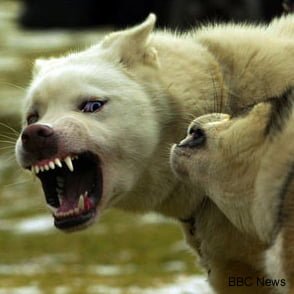 When you talk to another person in day-to-day life, you pick up on hundreds of body language cues without even realizing it. But did you know that your dog gives off the same cues regarding their temperament, mood, and behavior by using their body language?
When it comes to managing an aggressive dog, understanding body language is key. Assessing the body language of an aggressive dog can mean the difference between getting bitten and stopping a violent situation before it starts.
Here are several basic body language cues in an aggressive dog:
- Ears – Back or forward, pulled close to the head.
- Eyes – Narrow or staring.
- Mouth – Open lips, snarling teeth.
- Body – Tense, rigid, in a dominant position.
- Tail – Fur sticking up, tail sticking straight out.
- Behavior – Snarling, growling, barking.
Some of the behavioral cues listed above are obvious, like snarling or growling. Other behavioral cues from an aggressive dog are more subtle, like narrow eyes and a rigid body position.
Defensive Aggression versus Aggressive Attack
There’s a dramatic difference between defensive aggression and an aggressive attack. If a dog feels like they’re in danger, they will exhibit a fight-or-flight response, similar to humans. An example would be if a dog is on a leash and becomes frightened by another dog. His natural instinct will be to flee, but he may be forced to go on defensive attack if he is held captive on a leash.
Many people believe that a dog this situation is an aggressive dog, but this dog is actually fearful. This behavior is what is known as defensive aggression.
Here are several behavioral cues to make a distinction:
- Ears – Back
- Eyes – Pupils dilated
- Mouth – Tense, teeth exposed
- Body – Tense, fur raised
- Tail – Down and between legs
- Behavior – Snarling
Clearly, the body language between a defensive and an aggressive dog is quite different. A defensive dog is reacting out of his flight instinct; an aggressive dog is reacting out of his fight instinct.
How to Prevent a Dog Bite
Whether a dog is defensive or aggressive, he may be prone to bite if he feels threatened or attacked. Understanding both of the behavioral cues listed above will make it easier to manage a situation if a dog is snarling and showing signs that it may bite.
According to the Humane Society, the worst thing that you can do when faced with a defensive or aggressive dog is to turn your back and ran away.1
This again plays into the natural instinct of a dog to chase you, catch you, and bite you. Another fairly obvious tip to prevent a dog bite is to never disturb a dog when it is eating, sleeping, chewing on a toy, or caring for puppies.
If a dog has shown aggressive behavioral cues, you can use the following tips to prevent an attack:
- Do not scream or run away.
- Keep your hands at your sides, stay still, and avoid eye contact.
- Allow the dog to lose interest.
- Slowly back away from the dog.
- If the dog lunges to bite, throw a jacket, bag, bicycle, or another object in his path.
- If you are knocked to the ground, curl into the fetal position, place your hands over your ears, and stay still. Try to react as little as possible.
If your dog is showing signs of aggression, the best thing that you can do to prevent him from biting or attacking is to socialize him. Find a trainer that works well with aggressive dogs in order to slowly condition your dog to accept new dogs and strangers.
Additionally, if your dog has not been spayed or neutered, this could greatly reduce aggression and make it easier to socialize your dog in new situations. A routine procedure like neutering will make your dog less likely to fight with other dogs and bite strangers.
Make no mistake – aggression is a serious issue that needs to be addressed immediately. Avoiding or ignoring the behavioral signs listed above will only make the problem worse and could endanger those around you.
Sources:
- “How to Avoid a Dog Bite: The Humane Society of the United States.” The Humane Society of the United States: The Humane Society of the United States. N.p., n.d. Web. 28 Nov. 2011.
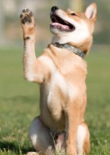
 Bringing a puppy home for the first time is a fun and exciting occasion. That is, until reality sets in, and you realize that you have quite a bit of work on your hands when it comes to house training and stopping a brand-new puppy from chewing and barking.
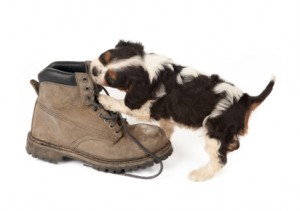 Chewing: If your puppy is playful and spends time playing with its new toys, you can use that opportunity to reinforce. Give a treat and lots of praise and petting to show your puppy that its good behavior has been rewarded.
 Housetraining: The only way to stop a puppy from soiling in the house is to catch it in the act. This is then the opportunity to punish by startling the puppy in the same way with an “AHH!” word and then take it outside. Once the puppy successfully uses the toilet outside, it should be rewarded with a treat, praise, and petting each time.
 Teaching your dog new tricks might not be the easiest thing in the world, but it’s highly beneficial to you and your dog. Teaching your dog new tricks can help strengthen your relationship with your beloved pet in many ways. Below are some great reasons why you should start teaching your dog new tricks.

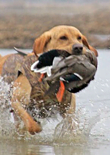
 Hunting dogs have 25 times more smell receptors than humans do and can smell odors at concentrations that are 100 million times lower than what we can. This great sense of smell is what enables hunting dogs to hunt very well in the wild. We all know that domesticated dogs get their food from their owners, but how do hunting dogs in the wild hunt for their food?
 Are you a new dog owner looking for information on how to take care of a dog? I have written this short article specifically for you so that you can give him the care and love that he needs to thrive in your home and bring you as much joy as possible.
 Getting a puppy is an exciting addition to a family. They are adorable and warm. They snuggle and cuddle and seem to do everything right. Unfortunately, this is not all there is to puppies. Getting a puppy is a lot of work, and they don’t stay little and cute forever.
 Your dog is learning each and every waking minute and maybe even when it sleeps. It may well figure out a good spot to sleep without getting disturbed. Either way, your dog will waste no opportunity in learning something; it knows no other way.