

How to Train Your Dog to Sit using Positive Reinforcement
By Sally Gutteridge | Posts , Training
 As a new dog owner it is perfectly normal to see your recent addition to the family as a complete mystery. Particularly with so much, and often conflicting, dog training advice available.
It is true that we are a completely different species to the canine and that we don’t speak the same language. It is possible however to communicate perfectly well and develop a great relationship with your new dog.
Dog training
Even when researching the command that we all initially teach our dog, how to train your dog to sit, you will encounter many training methods and lots of different advice. This advice can range from;
- Push the dog’s rear to the ground
- Lure with a treat
- Punish if the dog doesn’t sit on command – (even a tug on the dogs collar is punishment)
To be a good dog trainer and kind to your new canine ignore all of the above. Methods that involve punishment are dated and unfair to the dog, any dog training type that is based on dominance and wolf behavior is also inaccurate. The only ethical way to train your dog is with kindness and positive reinforcement. Teach your dog with a suitable reward to ensure his attention and motivation during training sessions.
Reinforce with reward
Positive reinforcement is based on rewarding a behavior with pinpoint accuracy, often with a treat or toy. It can be very difficult to give your dog either of these rewards quickly therefore difficult to pinpoint a particular behavior. So we use a cue word or other sound to show the dog that this particular behavior has provided the reward.
It is fairly easy to teach your dog to associate a stimulus or sound with reward. In the early 1900’s Scientist Ivan Pavlov learned that dogs in his laboratory would salivate at the sound of a bell. This was after a short time ringing the bell before meals because they associated the bell sound with feeding time.
In modern dog training we utilize this association to teach our dogs how we would like them to behave. Clicker training is a prime example of this, the dog is taught to associate the click with a food reward. The click sound can then be used to pinpoint a behavior with accuracy and show the dog exactly which behavior earned him the reward.
How to train your dog to sit-the importance of timing
When working out how to train your dog to sit using reward and reinforcement timing is crucial. If your dog offers three different behaviors in succession it is easy to reinforce the wrong one. Positive reinforcement is based on accurate timing for reward. So if you are training your dog to sit and within two minutes he sits, jumps up and barks it is easy to reinforce any of those with inaccurate timing.
So to train your dog to sit for a reward be careful with your timing. It is easy for your dog to associate anything he is doing at the time with reinforcement. If you say good boy and give him a treat for any behavior he will always repeat that behavior in the hope of getting a treat.
How to train your dog to sit:
- Decide on the association sound or word that you will use as a reinforcement tool (The prelude to the treat)
- Show your dog a reward, something that he really likes and that will motivate him.
- When you have his attention with the reward simply wait whilst he works out how he can get the treat from you.
- Your dog may offer behaviors that he has already learned, if he does just ignore them
- Eventually your dog will sit to try and work out what to do next, immediately reinforce with your association sound (click) or word. Then give him his treat.
- Repeat this and each time you will see that your dog is offering the sit sooner. Your dog has learned to sit by working it out for himself in order to gain a reward.
- Now you can introduce the command word sit, your dog will soon learn that this particular word is a prompt for the sit response.
When your dog learns with positive reinforcement he has to really think. The thinking involved ensures that your dog learns thoroughly and effectively. Each command you teach your dog by using this method will stay in his mind forever, for it is learned with motivation and a pleasurable experience.
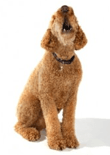
 An incessant barking dog is sufficient to drive the most patient and loving dog owner slightly mad. The most tempting thing to do in this circumstance is to shout at the excited dog to stop. By doing this though you are only getting the dog more excited. In many cases he will believe that you are joining in and bark louder still.
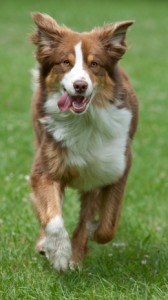 Recall training with your dog is crucial. The majority of dogs need to be able to run free to use up their energies on a daily basis. If your dog will not come back when called, then exercise can become a worrying and frustrating time.
 Positive dog training is reward based and motivational. Training your dog in a positive manner will ensure that the two of you have a great relationship. Communication is increased immensely by reward based training, and reinforcement alongside reward is a really enjoyable way to teach your dog.
 The German shepherd is a charming puppy. Loyal and humorous the shepherd is cute as a youngster and dignified as an adult. All puppies need socialization and basic positive learning experiences in order to grow into well rounded dogs. The German shepherd is no exception.
 A dog that shows signs of aggression can become a problem within a family environment; therefore any dog owner should have a basic understanding of why and how a dog can become aggressive.
 Dog training games provide so much more than mental stimulation to your dog. They enable handler control and encourage the dog to focus. They build the relationship between you and your dog and bring the same relationship onto another level.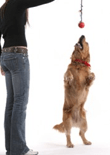
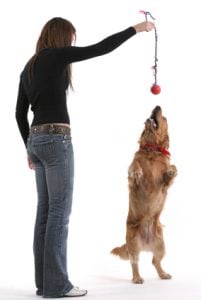 Basic dog training is not complicated. To train a dog is simply to teach him to do something. Dog training is often seen uniquely as teaching a dog to behave nicely, or do specific tricks to impress. What many people do not understand however is that is just as easy, if not easier, to train a dog to misbehave.
 What is positive dog training? Is there such a thing as a positive or negative dog training?
 A saying used daily in many circles is “you can’t teach old dog’s new tricks”. This is simply not true. A dog of any age will learn when motivation and circumstance permits. A human being can obtain a higher degree whilst simultaneously drawing a pension. A middle aged or elderly dog can learn equally well.