
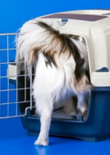
How to Crate Train a Puppy
By Jean Cote | Posts , Puppies
 Have you ever wondered how professional trainers are able to crate train a puppy and get him or her to be quiet while inside?
In this article, not only will you learn exactly how to crate train a puppy, but you will also learn a very effective way of conditioning your puppy to absolutely love his crate. This type of training is used throughout the world by professional dog trainers as a way of building a positive association to things, dogs, situations or in this case: to his crate.
The very first thing that you must do is find out what your puppy finds highly valuable. Let your puppy tell you what he or she finds valuable. If your puppy loves treats, experiment and try to find the one special type of treat that your puppy goes crazy for. Is it chicken, pork, sausage or cheese? Observe your puppy’s behavior and see which one your puppy is most enthusiastic about.
If your puppy is not food motivated, no worries! You can use his favorite toy instead. And of course, there is always your voice and physical touch which you can use to praise and reward your puppy. By knowing what your dog values the most, it will allow you to transfer that value into something else.
Are you ready to start conditioning your puppy? Don’t worry, this part is easy! Place your crate in the middle of a room with the door open, and let your puppy wander about. Don’t say anything; just wait quietly for your puppy to enter the crate on his own. As soon as your puppy enters the crate, immediately throw your reinforcement inside the crate, whether it is a treat, a toy or by verbally praising and cheering him or her for entering the crate.
By doing this, your puppy will learn that good things happen when he goes inside the crate. After just a few repetitions, your puppy will want to go inside the crate on his own because it is a source of goodies.
Note: In the beginning, it is important not to close the door behind him while he is in the crate. Many dog owners make the mistake of putting their puppy inside the crate, closing the door and leaving. Doing this creates a negative association to the crate, because the puppy loses his freedom and is not in any way reinforced for going inside the crate.
To summarize, learning how to crate train a puppy isn’t complicated, you simply have to make the crate a fun thing to be around. In the first few weeks that you bring your puppy home, I highly recommend that you play this game with your puppy and continue to build a positive association. Eventually, you can wait a second or two before giving your reinforcement. This will build duration to the behavior of being inside the crate.
To learn more about effective and positive ways of training your puppy, register to our dog forum and talk to hundreds of other dog owners who have dealt with the very same struggles you are facing today.
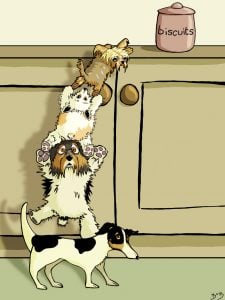 Extreme barking, of the high pitched Yorkshire terrier variety, is by far enough every morning to have me click on the kettle and feed my dog. I pop open the dog treats purely to silence the demanding holler. Being a somewhat relaxed dog trainer has its perks but this is not one of them. Each bark provokes a twitch of the eyelid equal to none.
 Dog walking can be made easy and fun by teaching your canine to behave nicely both on and off leash. This could take effort with some dogs, however all dogs will learn when taught properly, therefore the effort will be worth it.
 The internet is filled with advice on dog training. Everything from teaching a dog many complicated tricks to crate training puppies is covered somewhere online.
 An adult dog that pulls and barks on his leash can be frustrating and difficult to handle. Often the barking is due to social inadequacy, frustration or a mixture of both.
 Many parks and recreation grounds have their particular group. The same group of people that wander around daily together whilst their lucky dogs run and socialize together, the dogs and people become friends and everyone wins.
 It is a term often used, dog whisperer. Giving the impression that communication with a canine is something of a rare achievement. A basic internet search will provide one with plentiful dog expert’s that offer advice and label themselves a dog whisperer.
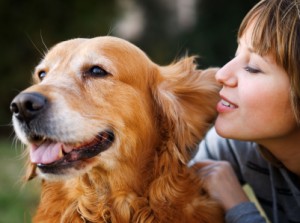
 The golden retriever is a nice dog to raise and train. Resembling a bear cub as a puppy the retriever will grow into a loyal and humorous companion with stunning looks. This breed of dog is rarely complicated and usually responds well to praise and food reward. Originally bred to retrieve game birds and waterfowl the retriever is often seen proudly, yet gently, carrying a toy or shoe.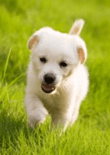
 The owner of a new puppy has an almost blank canvas. A dog learns from the moment it is born and all of a puppy’s experiences determine how it will be as an older dog.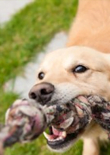
 Playing with your dog will build the relationship between you. It will use his mind in order to enable him to settle when you need him to, and an enthusiastic game will certainly be fun for both of you. The home that hosts multi dogs automatically provides stimulation for the animals by allowing interaction with each other. Single dogs benefit greatly from the interaction and stimulation they get when you play with your dog.